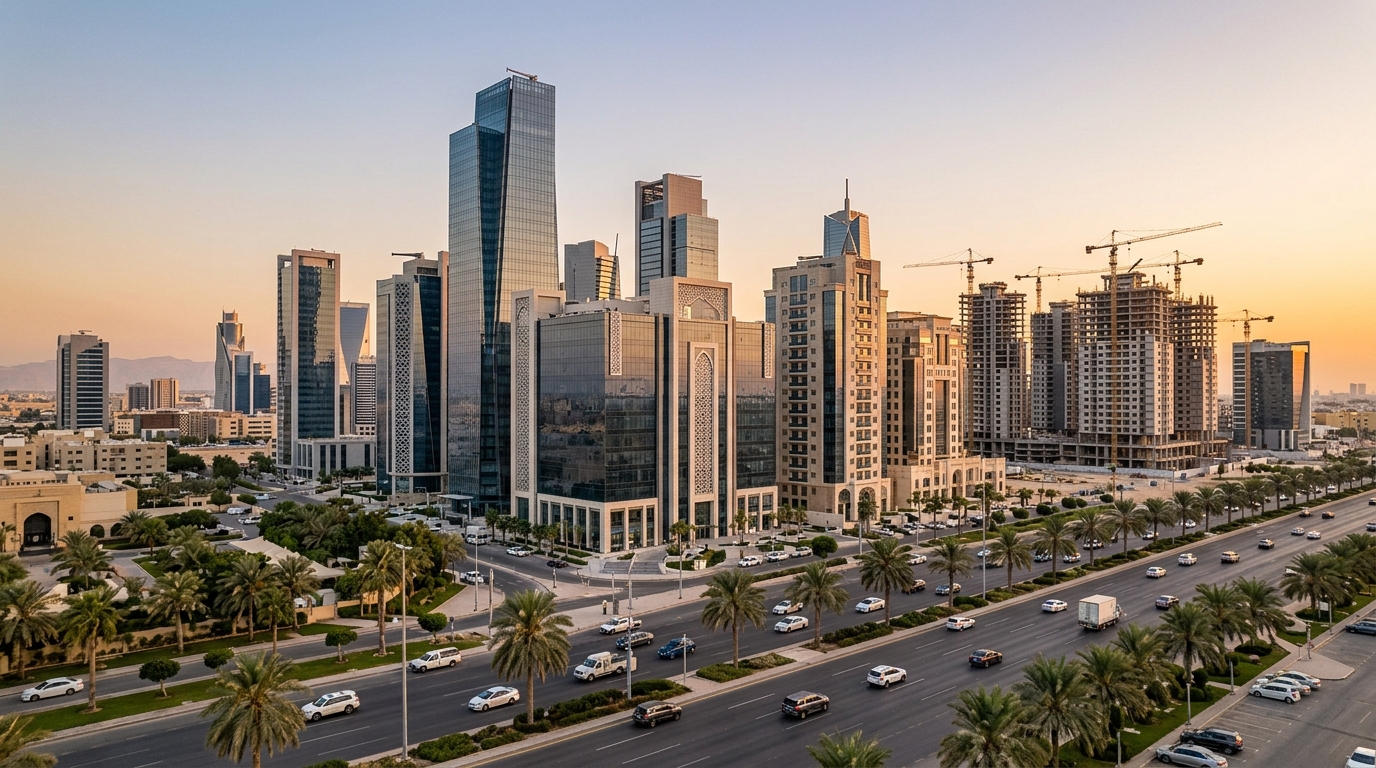
Saudi Arabia’s real estate sector is no longer just a market — it has become one of the central pillars of the Kingdom’s economic transformation. Driven by Vision 2030, giga-projects, regulatory reform, and a fast-growing population, the sector is shifting from a traditional, transaction-based industry into a structured, data-driven, and increasingly global investment destination.
For property owners, developers, and investors in the Eastern Province and across the Kingdom, understanding where the market is headed is no longer optional — it’s essential for making sound decisions. Here’s a clear look at the forces shaping the future of Saudi real estate, and what they mean for you.
1. Vision 2030 Remains the Market’s Core Engine
Vision 2030 continues to be the single biggest driver of real estate demand in the Kingdom. Government-backed giga-projects such as NEOM, Diriyah Gate, The Red Sea, and Qiddiya are creating entirely new economic centers, which in turn generate long-term demand for housing, offices, hospitality assets, and supporting infrastructure. Industry outlooks describe this as a structural shift rather than a temporary cycle — regulatory modernization, urban expansion, and digitalization are permanently changing how property is developed, marketed, and valued in Saudi Arabia.
What this means for you: Locations near infrastructure investment and giga-project corridors are positioned for sustained, long-term value growth — not just short-term speculation.
2. Residential Demand Stays Strong, Backed by Homeownership Programs
Residential property remains the largest and most active segment of the market. Programs like Sakani, combined with improving mortgage accessibility and rapid urbanization, continue to support homeownership demand across the Kingdom. Riyadh remains the dominant residential market, but Jeddah and the Eastern Province — including Dammam — are seeing growing activity as populations expand and infrastructure improves.
What this means for you: Well-located residential developments with efficient project delivery and clear title/contract documentation will continue to attract strong buyer and tenant interest.
3. Foreign Ownership Reform Is Opening the Door to Global Capital
A major regulatory shift took effect in early 2026: new property ownership rules now allow greater foreign ownership in major Saudi cities, alongside reduced transaction taxes. This is a significant milestone for a market that has historically been dominated by domestic capital, and it is expected to attract fresh international investment into residential, commercial, and mixed-use developments over the coming years.
What this means for you: Developers and property owners should prepare documentation, marketing, and legal structures now to be ready for increased interest from international buyers and investors.
4. A Healthy Market Correction, Not a Downturn
It’s worth being clear-eyed about recent numbers: the first half of 2026 saw a notable slowdown in transaction volumes and values compared to the exceptionally strong activity of 2025, as the market rebalances after several years of rapid growth. This kind of correction is normal in a maturing market and does not change the long-term trajectory — major government-backed developments, continued Vision 2030 investment, and expanding lending activity all point toward selective, sustainable recovery rather than a structural decline.
What this means for you: This is a market that rewards careful analysis over speculation. Reviewing actual neighborhood-level demand, regulatory data, and project fundamentals matters more now than in the boom years.
5. Commercial, Industrial, and Logistics Sectors Are Expanding
While residential property leads investment activity, commercial real estate, industrial assets, and logistics facilities are all growing steadily as the Kingdom diversifies its economy away from oil. Mixed-use developments — combining residential, retail, and office space — are also becoming more common, particularly around new urban centers and transit corridors like the Riyadh Metro.
What this means for you: Diversified real estate portfolios that include commercial and mixed-use assets are well positioned to benefit from Saudi Arabia’s broader economic diversification strategy.
6. Smart, Sustainable, and Regulated Development Is the New Standard
Digitalization and regulatory modernization are reshaping how real estate transactions happen — from digital registration systems to greater market transparency. At the same time, sustainability and smart-building standards are becoming a baseline expectation rather than a premium feature, especially in giga-project zones and new master-planned communities.
What this means for you: Projects designed with smart infrastructure, sustainability credentials, and full regulatory compliance from day one will have a real competitive advantage — both in attracting buyers and in long-term asset value.
What This Means for Property Owners, Developers, and Investors
Saudi Arabia’s real estate future is being built on three pillars: structural economic transformation, expanding regulatory sophistication, and sustained government investment. The opportunity is significant, but success increasingly depends on execution discipline — accurate market analysis, sound contracts, and professional project management — rather than simply riding market momentum.
This is exactly where Tajseem Real Estate and Engineering Consultancy supports our clients, through:
- Real Estate Marketing and Property Management — positioning your properties to reach the right buyers and tenants in a fast-evolving market.
- Contracts and Projects Development — ensuring your developments are structured, documented, and delivered with the rigor today’s market demands.
- Engineering and Real Estate Consultancy — providing the technical and strategic guidance needed to make confident, future-proof investment decisions.
Final Thoughts
The future of real estate in Saudi Arabia is one of transformation, not just growth. Vision 2030, foreign ownership reform, and infrastructure expansion are creating a market that rewards strategic, well-informed decisions. Whether you’re planning a new development, managing an existing portfolio, or considering your first investment in the Kingdom, the fundamentals point toward long-term opportunity for those who plan carefully.
Want to explore how these trends apply to your project or investment? Contact Tajseem Real Estate and Engineering Consultancy for expert guidance tailored to your goals.
Disclaimer: This article is for general informational purposes and does not constitute financial, legal, or investment advice. Market conditions vary by city, neighborhood, and property type — always consult with a qualified advisor before making investment decisions.